Dog Chew Nepal sells dog chews, and when I started work on its website it was barely visible in Google. This case study sets out what I found, the order I worked in and the results.
The challenge
Dog Chew Nepal’s site had three connected problems. Its structure was weak, there was no clear hierarchy between or within pages, and it had low authority. Together they left the site with low visibility in search.
These problems feed each other. When a site has no clear hierarchy, search engines struggle to tell which pages matter most and what each one is about. When a site also carries little authority, there is not much to lift even the pages that are well built. Fixing one of these on its own rarely moves much, which is why the work had to cover all three.
What I did
The approach had five parts.
- A site audit. An SEO audit comes first because it shows what is actually wrong before anything is changed. In principle, that means going through the pages that can be indexed and checking how they are organised, titled and linked.
- Content mapping. Keyword mapping means deciding which page should answer which search, so every page has one job and no two pages compete for the same query.
- Heading restructuring. Heading tags give a page its outline. Restructuring them gives each page a clear main heading and subheadings in a logical order, which helps readers and search engines understand the page.
- Metadata alignment. This means bringing each page’s title tag and meta description in line with the search that page is mapped to, so what appears in the results matches what the page offers.
- A link strategy. Links connect pages to each other and bring authority from elsewhere. Planned internal linking is how a site shows which pages are most important.
Results
The work produced these results:
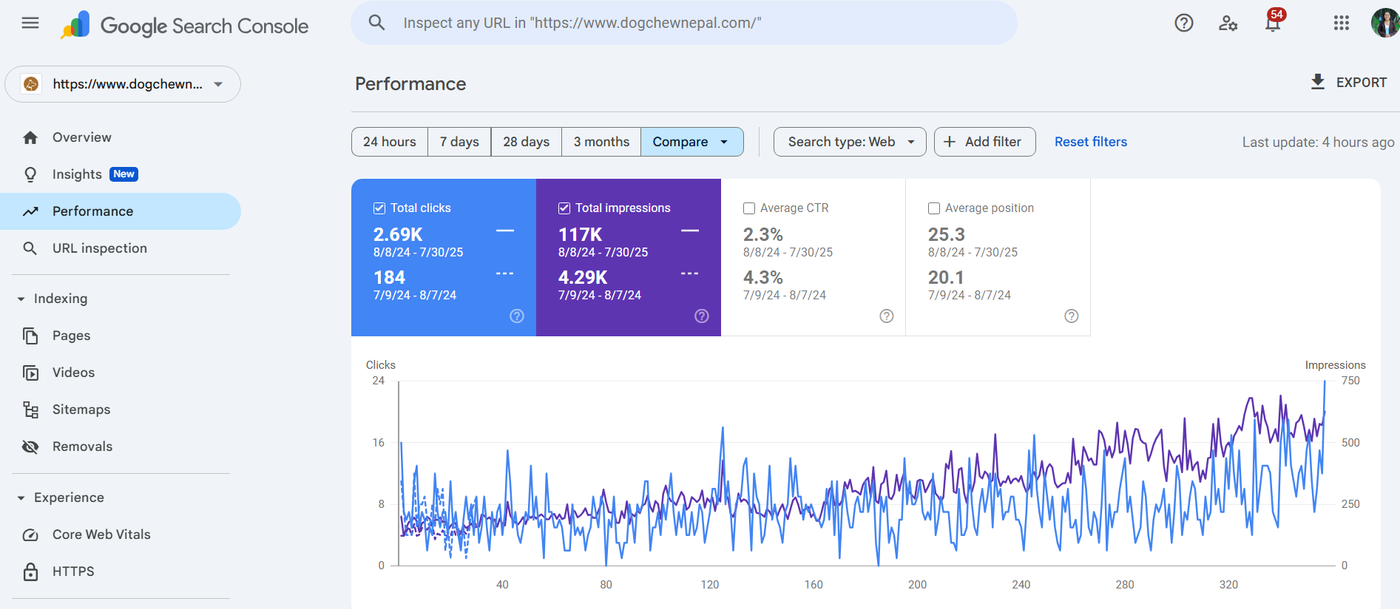
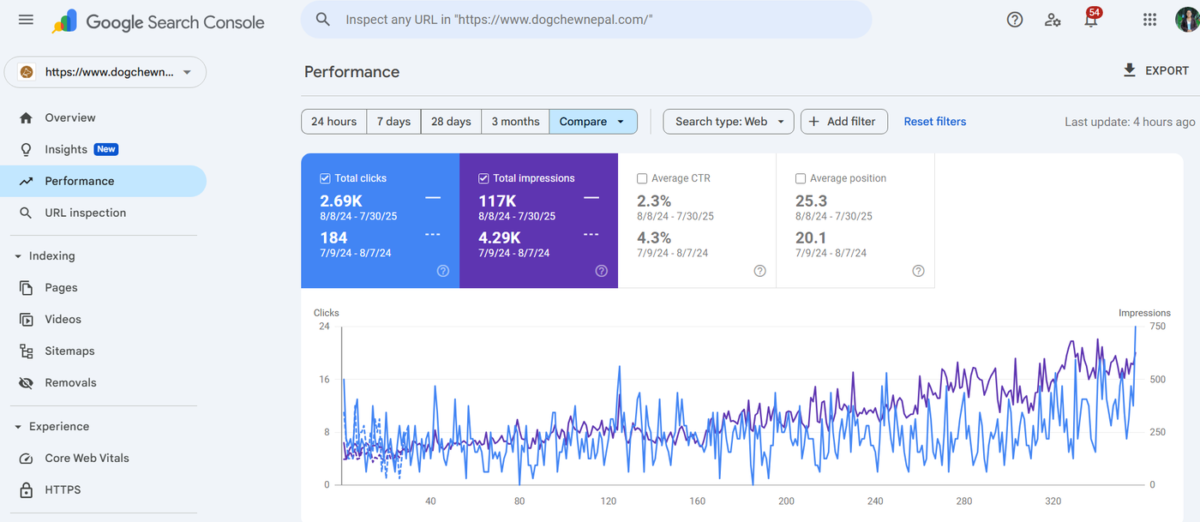
- Impressions grew from 4.29K to 117,000+.
- The site received 2.6K clicks.
An impression is counted each time the site appears in someone’s search results, and a click is a visit from those results. A rise in impressions shows that Google became far more willing to show the site, which is what structural work is meant to change. Clicks show how many people then chose to visit.
What this shows
If you run a UK business whose website has grown one page at a time, the lesson is the order of work. Fix the structure, decide what each page is for, and tidy the headings and metadata before you write more content or chase links. New pages added to a muddled site usually make the muddle worse, while a clear structure gives every later piece of work something to build on.
Most of this is on-page SEO, and it is often where the quickest gains sit for a small site. If you would like to know where your own site stands, request a free SEO audit and I will tell you what I would fix first.