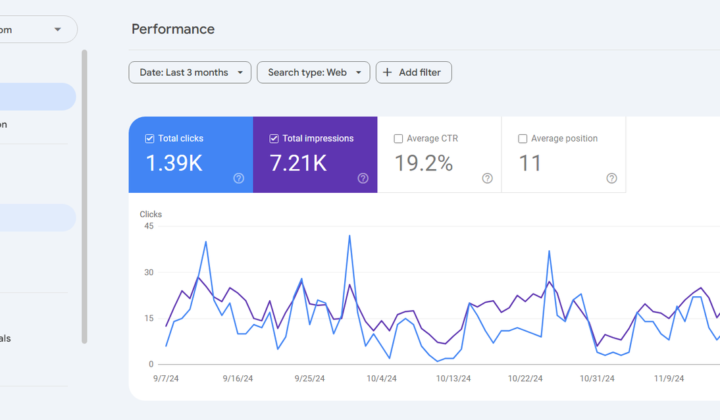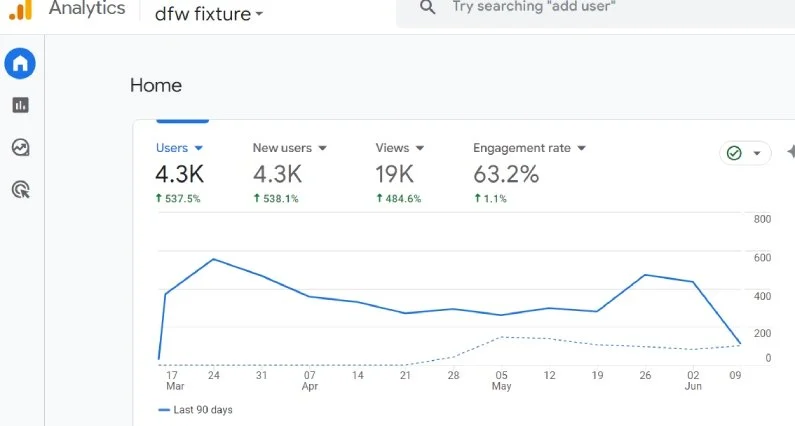
This project was organic SEO for a start-up website in the USA. The business is not named on my site, so it stays unnamed here. What I can share is the published picture: where the site started, the work I did and what it achieved in three months.
The challenge
The site was newly built. It had zero traffic and no search signals: no ranking history, no links pointing at it and no record of people finding it through Google.
That is a different problem from fixing an established site. An older site that has slipped still has something to work with, such as indexed pages, existing links and people who already search for its name. A brand-new start-up website has none of those. Search engines have to discover it, understand it and decide it deserves a place in results, all with very little to go on.
What I did
The approach had six parts.
- Technical groundwork. On any new site this means making sure search engines can reach and read the pages that matter, the foundation of technical SEO. In principle it covers crawl access, indexing and a clean XML sitemap.
- Keyword optimisation. Choosing the searches the site could realistically compete for and aligning pages with them. This is where keyword research earns its place on a site with no authority yet.
- Content structuring. Organising pages so each one has a clear purpose and a logical heading order, which helps both readers and search engines understand them.
- Metadata refinement. Tightening page titles and descriptions so they describe each page accurately and give searchers a reason to click.
- Performance tracking. Measuring from the start, so progress could be followed rather than guessed at.
- Off-page link building. Earning links from other websites. A new domain has nothing vouching for it, and relevant link building starts to change that.
Results
As published on my site, the results were:
- 4,300+ new users in 3 months.
- A 63.2% engaged audience.
- 19,000+ views.
For a site that began with zero traffic, those figures describe its first audience: people arriving for the first time, a majority of whom engaged with what they found, and a healthy number of pages viewed between them.
What this shows
If you are launching a new website in the UK, the lesson is about order. A new site cannot lean on history, so the basics have to be right from day one: pages search engines can crawl and index, a clear structure, accurate titles and descriptions, targeted terms you can actually win, and a few genuine links. Just as important, set up tracking before launch. Without it, you will not know which of your early visitors came from search or what they did once they arrived.
If your site has not gone live yet, my website launch SEO checklist covers the checks worth doing before and after the switch. If it is already live and quiet, you can request a free SEO audit and I will tell you what I would fix first.