A freelance SEO expert is one person, working for themselves, who carries out the search work on your site personally. There is no account manager between you and the person making the changes, and no junior team picking up the work once a senior person has won the pitch. I am Sudeshna Thapa, and I work this way from London with businesses across the UK.
This page is for UK businesses deciding between a freelancer and an agency. It sets out what each does well, where a freelancer falls short, how I run the work and how fees are usually built, so you can choose on facts rather than on a sales call.
What you get when you hire me directly
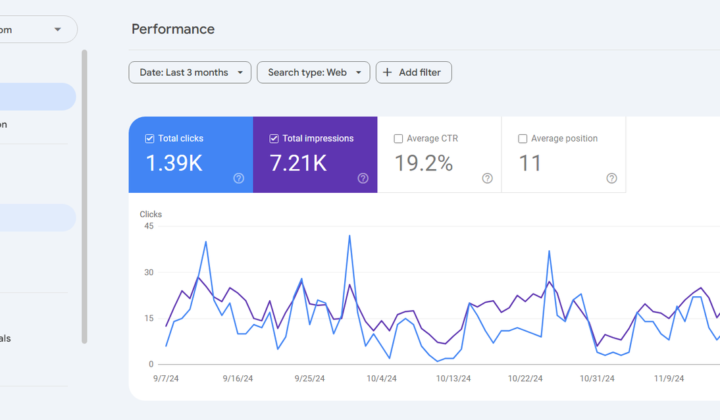
The real difference is who touches your site. When you hire me, the audit, the recommendations, the briefs and the reports all come from the same person, and that person has read your Google Search Console data herself rather than a summary of it.
- One point of contact. You email or call me, not a shared inbox. Questions are answered by the person who knows why each change was made.
- Decisions made on your data. I work from what your site, your analytics and your search results actually show, not from a fixed monthly package of tasks that every client receives.
- No hidden subcontracting. If a job needs a skill I do not offer, such as bespoke development or copywriting at volume, I tell you and you choose who does it. Your work is never passed quietly to someone you have not met.
- Your accounts stay yours. Search Console, Google Analytics 4, your Google Business Profile and your website logins remain in your name. I ask for user access, and you can remove it whenever you choose.
Freelancer, agency or marketplace gig
Each of the three can be the right answer. They differ in who does the work, how much capacity sits behind it and what the fee pays for. The comparison below describes how each model usually works; it is my own judgement, not survey data.
| Freelance SEO expert | SEO agency | Marketplace gig | |
|---|---|---|---|
| Who does the work | The person you hired | A team, which may include junior staff | Whoever accepts the order |
| Who you speak to | The same person | Usually an account manager | Messages through the platform |
| Capacity | One person’s working week, so scope is agreed up front | Can add people quickly for large projects | Fixed, small tasks |
| Range of skills | SEO and the related work one specialist can do well | Wider: design, development, PR and content at volume | Usually one narrow task |
| What the fee pays for | Mainly the specialist’s own time | The work plus management, salaries and premises | A set output, whatever the site needs |
| Commitment | Set out in a written scope and terms | Varies; check any minimum term before signing | One order at a time |
When an agency is the better choice
If you need a large volume of new content every month, a full website build, digital PR and SEO all running at once, or several specialists available on the same day, an agency is set up for that and one freelancer is not. The same is true if your procurement rules require a supplier with formal account management. I would rather say so on a first call than take on work I cannot do properly.
Where a cheap gig goes wrong
Low-cost gigs tend to sell a fixed output: a number of links, a “full audit” delivered in a day, a tool score pushed to 100. That output rarely matches what your site needs. Bought links of the kind often sold this way are a black hat SEO tactic that Google’s spam policies target, and cleaning up after them costs more than the gig did. If you go down that route, ask exactly what will be changed on your site and where any links will come from.
Whichever route you take, my article on choosing a digital marketing agency or consultant lists the questions worth asking before you sign anything.
The SEO work I take on as a freelancer
Most engagements start with one of the pieces below, and many combine two or three. The full list of SEO services has a page for each, with what it covers and what you receive.
- A full SEO audit, with every problem ranked by how much it is likely to be holding the site back.
- Technical SEO fixes for crawling, indexing, speed and site structure, made with your developer or directly in your CMS.
- On-page work on existing pages: titles, headings, copy and internal links, so each page answers one search clearly.
- Local SEO for businesses serving customers in a particular town, city or London borough, including the Google Business Profile.
- A content plan that says what to publish, on which page and why, with briefs your writers can follow.
- Link building through outreach and by giving other sites a genuine reason to mention you.
How I work as an SEO freelancer
- A first look. You send me your site through the free audit form. I review it and reply with what I would fix first and why, whether or not you go on to hire me.
- A call and a written scope. We talk through your goals, your budget and who on your side can make changes. I then write a scope listing the work, what you receive and what it costs.
- Access and a starting point. You give me user access to Search Console, Analytics and the CMS. I record where things stand before anything changes, so progress is measured against a fixed baseline.
- The work, in priority order. Problems that stop Google seeing your pages come first, then the pages closest to producing enquiries, then new content.
- Plain reporting. You get a short, plain update on what I did, what changed in search visibility and enquiries, and what comes next. How often, and whether it comes in writing or on a call, is agreed before work starts.
I am based in London and work remotely with businesses anywhere in the UK, meeting in person in London where that helps. Because one person does all the work, capacity is finite, so I will give you a realistic start date when we speak rather than start straight away and spread the work thin.
How freelance SEO is usually priced
Freelance SEO in the UK is normally charged in one of three ways. Which one fits depends on whether the job has a clear finish.
- A fixed project fee for work with a defined end, such as an audit, a pre-launch check or a set of page rewrites.
- A monthly fee for ongoing work, where the scope states what is done each month.
- A day rate for advice, training or work that is hard to scope in advance.
My own fees are quoted for each job in GBP, after a free audit or a first call, once I know the size of the site and what it needs. Whatever the model, you see the price in writing before work starts, and my terms of engagement set out payment and notice.
A point for larger businesses: when a freelancer supplies services through their own limited company, the off-payroll working rules (IR35) can apply, and since April 2021 medium and large private-sector clients have been responsible for deciding the worker’s status. HMRC explains this in its guidance on off-payroll working. If your business falls within those rules, raise it at the start and we can settle how they apply before any contract is signed.
What I will not promise
Nobody outside Google controls its rankings, so no freelancer or agency can honestly guarantee a position. What I commit to is doing the work the evidence supports, explaining why, and reporting what happened, including when something did not move. If anyone offers you page one by a fixed date, ask them how they could know.
How quickly things change depends on the state of the site, the competition in your market and how fast fixes go live. My article on how long SEO takes to show results explains what usually drives the timescale.
You will not find client names or results on this page. Where results appear on this site, they are published only with the client’s written permission and with evidence you can check. My background and the way I approach the work are on the about page.
Start with a free SEO audit
The quickest way to judge a freelancer is to see how they think about your own site. Request a free SEO audit and I will send back the problems I would fix first, in plain English, with no obligation to hire me.