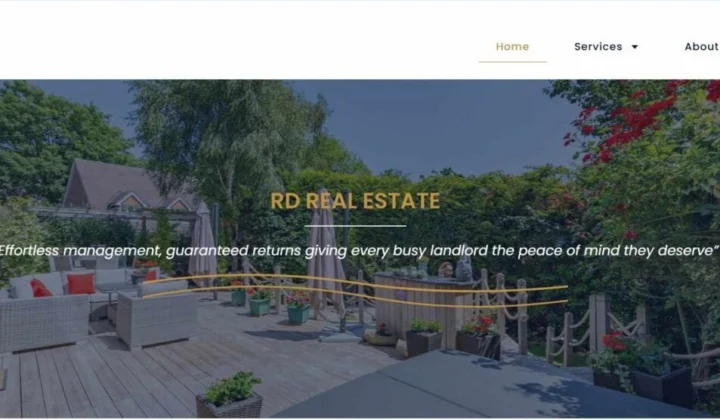
This project was a website for a property business in the UK, where I was the web and SEO project lead. The client is not named here, and the results published for it are qualitative rather than numerical, so this page describes the work and what it produced without adding figures.
The challenge
The business needed a site built with a search-ready structure. In other words, the website had to be planned so that search engines could understand it and visitors could find their way around from the day it launched, rather than having SEO added to a finished site afterwards.
That distinction matters. When a site is designed first and optimised later, fixing the structure usually means changing addresses, merging or splitting pages and rewriting copy on a live site. Building the structure in from the start avoids most of that rework.
What I did
The work covered four areas: site planning, structural refinement, content alignment and layout optimisation.
Site planning. Planning a site for search starts with its site architecture: which pages it needs, how they group into sections and how a visitor moves between them. In principle, this is also where each page is given one clear purpose, which is what keyword mapping formalises, so that two pages are not competing for the same search.
Structural refinement. A plan drawn up before the content exists is a starting point, not a final answer. Refining the structure means adjusting it as the build progresses, so the sections and pages reflect what the business actually has to say.
Content alignment. Aligning content means making sure each page’s copy matches the reason someone would arrive on it, its search intent, and fits the place that page holds in the structure.
Layout optimisation. Layout decides whether visitors find what they came for. Generally, that means putting the most useful information and the next step where people look first, including above the fold on a phone.
Results
The published results for this project are a search-ready build and a clean user experience, giving the business a foundation for long-term SEO growth. No traffic, ranking or enquiry figures were published for it, so I have not added any.
What this shows
If you are planning a new website for a property business, the cheapest moment to get SEO right is before the site is built. Agree the pages and their purpose first, then write and design to that plan, and the site starts life with a structure that ongoing SEO can build on. My page on SEO for estate agents and property businesses explains how I work in the sector, and if you already have a site, you can request a free SEO audit to see where it stands.